10 Real-World Use Cases Showing How an AIOps Platform Development Solution Transforms ITSM Performance
Exploring ten practical examples of how AIOps Platform Development Solutions enhance IT service management by automating operations, predicting issues
n addition to their literary achievements, Bruce Wayne has been a prominent voice in the literary community, participating in workshops, giving lectures, and mentoring aspiring writers.
In today’s rapidly evolving digital ecosystem, IT Service Management (ITSM) faces immense challenges in maintaining speed, scalability, and reliability across complex IT infrastructures. Traditional ITSM systems struggle to manage the exponential growth of data generated by networks, applications, and users. This is where an AIOps Platform Development Solution steps in to redefine IT operations.
By integrating artificial intelligence, machine learning, and automation, AIOps enables IT teams to detect anomalies faster, predict outages before they occur, and automate routine workflows. The result is an intelligent IT environment that continuously learns, adapts, and optimizes performance.
This blog explores ten real-world use cases that demonstrate how an AIOps Platform Development Solution transforms ITSM performance, improving uptime, productivity, and decision-making across industries.
1. Automated Incident Detection and Root Cause Analysis
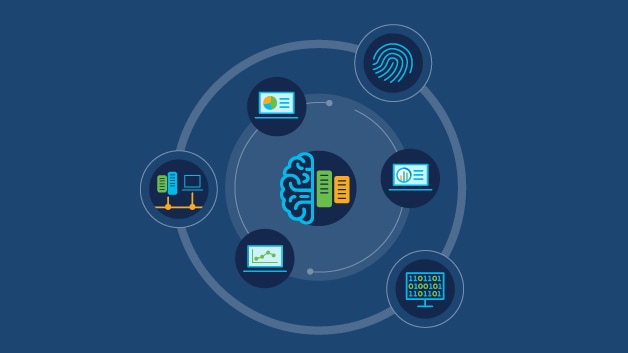
One of the most powerful capabilities of an AIOps platform is its ability to automate incident detection and root cause analysis. Traditional IT teams spend countless hours identifying the source of performance issues. With AIOps, this process becomes instant and intelligent.
AIOps Platform Development Solution analyze data from monitoring tools, logs, and application performance systems to identify patterns that indicate issues. When an anomaly occurs, the platform automatically correlates events across systems to pinpoint the root cause. This eliminates manual investigation and drastically reduces Mean Time to Resolution (MTTR).
For example, a global retail enterprise implemented an AIOps platform that analyzed millions of daily events. Within weeks, it reduced false alerts by 80% and shortened incident resolution time by 60%, significantly improving service availability.
2. Predictive Maintenance and Outage Prevention
Predictive maintenance is one of the most valuable outcomes of AIOps in ITSM. Instead of waiting for failures to occur, an AIOps platform can forecast potential outages using historical data, trends, and anomaly detection models.
A financial services company leveraged predictive analytics within its AIOps system to monitor infrastructure components in real time. The platform detected early signs of disk and network failures, allowing the IT team to take proactive measures before downtime occurred.
By implementing predictive maintenance, organizations can achieve higher uptime, minimize disruptions, and improve customer satisfaction. This proactive approach not only reduces costs but also ensures a smoother digital experience for end-users.
3. Intelligent Alert Correlation and Noise Reduction
Large enterprises receive thousands of alerts daily from various IT monitoring systems. Many of these alerts are redundant, irrelevant, or false positives that consume valuable IT time. AIOps platforms help address this challenge through intelligent alert correlation and noise reduction.
By using advanced pattern recognition and machine learning models, the AIOps Platform Development Solution groups related alerts into meaningful incident clusters. This allows IT teams to focus only on critical events that need attention.
A leading telecom company deployed AIOps to handle over 50,000 daily alerts. The solution filtered redundant notifications and presented correlated insights, reducing alert noise by 90%. The ITSM team could then allocate resources efficiently and improve response times dramatically.
4. Automated Service Desk Operations
The integration of AIOps into ITSM transforms service desk operations by automating ticket creation, classification, routing, and resolution. Instead of relying on manual input, AIOps uses data-driven insights to handle these processes autonomously.
For instance, an enterprise-level AIOps platform can automatically generate incident tickets when anomalies are detected. It also assigns the ticket to the right team or triggers self-healing scripts to resolve the issue automatically.
A technology company implementing AIOps-driven automation achieved a 40% reduction in service desk workload. Routine tickets such as password resets, system reboots, and performance alerts were automatically handled by the platform, freeing human agents to focus on complex issues that required strategic thinking.
5. Capacity Planning and Resource Optimization
AIOps plays a crucial role in capacity planning and resource optimization within ITSM. With continuous monitoring of system performance and workload patterns, AIOps provides predictive insights that help IT managers plan for future resource needs.
A cloud services provider integrated AIOps into its ITSM strategy to analyze workload utilization across virtual machines, storage systems, and databases. The platform recommended optimal resource distribution, preventing over-provisioning and reducing operational costs by 25%.
By leveraging real-time analytics, enterprises can ensure that IT resources are always aligned with business demands. This data-driven approach eliminates waste and supports scalability, especially in hybrid and multi-cloud environments.
6. Automated Compliance and Security Monitoring
Maintaining compliance and security across IT systems is a major challenge for enterprises. AIOps platforms can automate compliance checks and monitor security anomalies to ensure adherence to policies and regulatory frameworks.
Through continuous log analysis and behavior monitoring, AIOps detects unusual activities that might indicate security breaches or policy violations. It can automatically generate alerts and even trigger incident response workflows to mitigate threats.
A healthcare organization adopted an AIOps platform to enhance compliance with data privacy regulations. The system continuously scanned audit logs, flagged irregular data access patterns, and ensured security incidents were addressed within minutes. This not only strengthened compliance but also built trust among stakeholders and customers.
7. Enhanced End-User Experience Management
End-user satisfaction is a critical measure of ITSM success. AIOps enhances end-user experience management by analyzing performance metrics, usage patterns, and service feedback in real time.
For instance, when application performance dips or latency increases, the AIOps platform can automatically diagnose whether the problem lies in the network, infrastructure, or software. It can even predict potential slowdowns based on historical trends.
A multinational e-commerce company adopted an AIOps solution that monitored customer-facing applications around the clock. The system identified bottlenecks before users experienced issues, enabling proactive adjustments. As a result, the company improved its customer satisfaction score by 35% and reduced churn.
8. Dynamic IT Automation and Self-Healing Systems
One of the defining features of an AIOps Platform Development Solution is the creation of self-healing IT environments. This capability allows systems to automatically detect issues and execute predefined actions to resolve them without human intervention.
For example, if a database server exceeds its CPU threshold, the AIOps platform can automatically allocate additional resources or restart the service based on historical resolution data.
An enterprise cloud provider that implemented self-healing capabilities through AIOps saw a 50% decrease in downtime incidents. This automation ensured continuous availability while minimizing operational costs and human error.
By enabling self-healing, AIOps reduces dependency on manual intervention, ensures consistent service quality, and supports continuous IT optimization.
9. Unified Observability and Cross-Domain Collaboration
In complex IT environments, different teams often operate in silos, using separate tools for network, application, and infrastructure monitoring. This fragmentation makes collaboration and problem resolution difficult.
An AIOps platform brings unified observability by integrating data from diverse systems and presenting it in a single, cohesive dashboard. It enables cross-domain visibility and fosters better collaboration between IT, DevOps, and security teams.
For instance, a global insurance provider deployed AIOps to unify observability across its hybrid cloud ecosystem. The platform correlated data from over 20 different monitoring tools and provided a comprehensive view of the IT environment. This integration improved cross-team communication, reduced data silos, and accelerated incident resolution times by 45%.
Unified observability not only enhances visibility but also empowers teams to make informed, data-driven decisions faster.
10. Continuous Service Improvement Through Data Insights
Continuous improvement is a fundamental principle of ITSM. AIOps takes this concept to a new level by continuously analyzing IT operations data to identify opportunities for optimization and innovation.
AIOps platforms provide insights into recurring incidents, performance trends, and resource utilization. These insights help organizations redesign workflows, refine automation scripts, and strengthen service delivery models.
A logistics company using AIOps analytics identified recurring application slowdowns linked to specific API calls. By addressing these issues proactively, they improved service performance by 30% and reduced recurring tickets significantly. Over time, these insights fueled a cycle of continuous improvement that enhanced IT service reliability and business agility.
The Business Impact of Implementing an AIOps Platform Development Solution
The adoption of an AIOps Platform Development Solution brings measurable benefits to enterprises seeking to modernize ITSM. These include:
Faster Incident Resolution: AIOps reduces Mean Time to Resolution (MTTR) by automating root cause analysis and response workflows.
Operational Cost Reduction: Automated workflows and predictive analytics eliminate redundant tasks, lowering operational costs.
Improved Uptime and Reliability: Predictive maintenance and self-healing capabilities prevent outages before they impact users.
Enhanced Productivity: IT staff can focus on strategic initiatives instead of routine troubleshooting.
Data-Driven Decision Making: Unified insights enable informed decisions for resource allocation, risk management, and process improvement.
Scalability: AIOps supports dynamic environments, adapting seamlessly as organizations scale infrastructure and workloads.
As digital ecosystems expand, these outcomes become critical for maintaining IT agility and competitiveness in a data-driven world.
Industry Applications of AIOps-Driven ITSM
The transformation of ITSM through AIOps is not limited to one sector. Different industries leverage it for domain-specific needs:
Banking and Financial Services: For fraud detection, risk management, and ensuring uptime for digital transactions.
Healthcare: To secure patient data, maintain compliance, and ensure application reliability in telehealth systems.
Retail and E-commerce: For demand forecasting, personalized user experience, and application performance optimization.
Telecommunications: For real-time network monitoring, predictive fault detection, and seamless customer service.
Manufacturing: To monitor IoT systems, ensure uptime of production machinery, and optimize logistics operations.
In each of these industries, AIOps acts as the intelligent backbone that supports innovation, stability, and scalability.
Challenges in Adopting AIOps and How to Overcome Them
While AIOps offers significant advantages, successful implementation requires strategic planning. Common challenges include data silos, lack of integration between monitoring tools, and cultural resistance to automation.
Organizations can overcome these challenges by:
Starting Small: Implement AIOps in specific ITSM areas such as incident management or predictive analytics before scaling up.
Ensuring Data Quality: Reliable, clean data is essential for effective machine learning models.
Integrating Existing Tools: Seamless integration ensures continuity and better visibility across systems.
Building a Collaborative Culture: Encourage cross-team cooperation between IT, DevOps, and business stakeholders.
Choosing the Right Platform: A tailored AIOps Platform Development Solution ensures alignment with organizational goals and IT infrastructure.
A phased, strategic approach ensures smooth adoption and maximizes ROI.
The Future of ITSM with AIOps
The future of ITSM is intelligent, automated, and proactive. As artificial intelligence continues to evolve, AIOps will become the cornerstone of autonomous IT operations. Future advancements will bring enhanced predictive models, deeper contextual awareness, and even more powerful self-healing mechanisms.
By combining AIOps with emerging technologies such as generative AI, edge computing, and IoT analytics, ITSM will move beyond reactive management to fully autonomous systems capable of making real-time decisions with minimal human oversight.
Organizations that invest in AIOps today are positioning themselves for a future where IT operations run seamlessly, enabling innovation and delivering exceptional customer experiences.
Conclusion
The ten real-world use cases discussed in this article clearly illustrate how an AIOps Platform Development Solution transforms ITSM performance. From automated incident management and predictive maintenance to self-healing systems and continuous improvement, AIOps redefines how enterprises manage and optimize their IT operations.
By merging artificial intelligence, machine learning, and automation, AIOps eliminates inefficiencies and introduces intelligent agility into ITSM workflows. The result is a more resilient, proactive, and cost-effective IT environment capable of supporting digital transformation at scale.
As businesses strive for operational excellence, adopting an AIOps-driven ITSM model is no longer an option—it is a necessity for achieving sustainable, data-driven IT success in 2025 and beyond.